
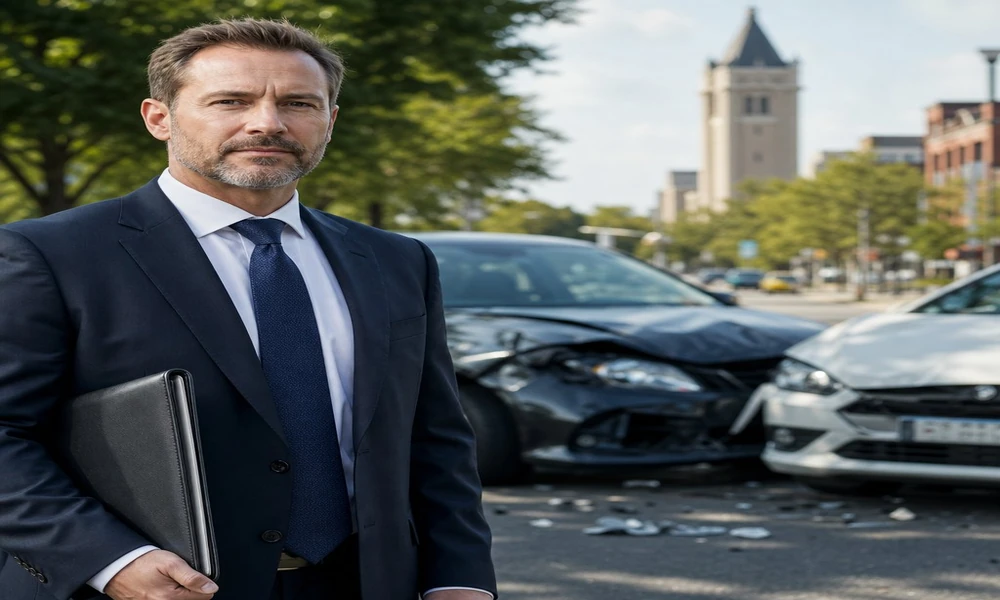
There are only a handful of seconds between a green light and the impact of a front end in a Waukegan crash. After the accident on a Waukegan street covered with ice, one driver points at a wet spot by the side of the road and blames black ice. The other driver thinks he saw the taillights of the vehicle ahead come into view too fast. By the time the sun goes down, the ice has thawed, the vehicles are gone and the road looks normal again.
Two Drivers, Two Stories About How the Collision Happened
Imagine a crash in the morning involving a sedan that was stationary at a stoplight and an SUV that came up from behind. The driver of the SUV says that he stepped on the brakes and then lost control on a layer of black ice. Inside the other vehicle, a driver spilled his coffee all over the console and swears that the SUV did not seem to be slowing down when it hit.
The two stories could both be true. Ice might have made the surface slippery, even if it did not look like the slushy patches that most drivers associate with winter roads. But it doesn’t mean that either driver escaped blame. Other factors will still need to be investigated, including driving speed, how far behind the driver was traveling, with the full details at https://www.oecd.org/en, the condition of the tires, whether he was braking or steering, and whether he took any measures to account for freezing temperatures.
Piecing Together Events Before the Crash
Road evidence may wash away under salt, the tread of tires and the warming sun. A Waukegan car accident lawyer will attempt to find evidence that can recreate these moments, rather than just taking the word of the two drivers standing by a tow truck.
Possible evidence may include:
- Video footage from dashcams showing the distance between the vehicles, the status of brake lights, which lane they were in, and the sheen of the road at night under streetlights.
- Photos of the tire treads measured against a ruler or a quarter, which reveal irregular wear patterns on the inside of the tire.
- Information recorded from the vehicle, such as vehicle speed, brake usage and steering inputs immediately before the crash.
- Weather reports showing temperature, precipitation, wind and any recent periods of melting.
- Logs indicating the area where the salt truck drove and how long ago the road section was treated.
Other sources of video or photos may also be useful. A shop’s security camera may have caught the headlights in its frame and a home security camera may have captured the noise of a car braking and then hitting the stopped car. Such footage may get erased while the front end of the vehicle is being repaired.
Security camera recording evidence from a winter car crash
Physical Evidence of the Crash
The extent of the damage may help support one or the other version of events. A collision that affected the center of the sedan’s back end may support the theory that it was hit straight-on. Damage that occurred mostly on one side of the bumper could suggest that the SUV was turning, moving lanes or attempting to steer out of the way of the stopped car. Scrapes along the wheel wells and a misaligned license plate bracket may give clues about the direction of the impact.

Investigators examining vehicle damage after a winter collision
The tires themselves should be inspected. A picture of them taken several days after the crash may reveal a tread pattern with small indentations filled with dust. Tire inflation records and service history may provide additional information. The tires may have been worn, providing less grip prior to the crash. Even new winter tires don’t grant a driver a license to drive too fast or too closely behind another vehicle.
Driver Behavior vs. Road Conditions
Black ice is often found near bridges, in shaded areas at intersections (click for more info), where water drains, and on sections of the road that have been subjected to snow melt. It can create a strip of ice along one portion of the road while the rest of the road is damp. The physical characteristics of the roadway may be cross-checked against the logs of when it was treated and the weather report on the day of the crash.
Driver behavior is also important. Speed that would be safe on dry pavement might be too fast near piles of snow and slush. Cell phone records, the audio from dashcams and witness statements may show whether the driver was distracted or failed to react to the vehicle ahead in time. A coffee cup lying on the floor near the accelerator or the brakes might lead investigators to wonder why it was there. The position of an object after a crash alone, however, does not prove that it caused the collision.
Gather Evidence Before It Disappears
Evidence at a winter accident site can change rapidly. Photos of the road, the vehicles, the tires, the surveillance cameras and the debris may capture details that will disappear when the next salt truck drives by. An early investigation creates a solid record, especially when everyone keeps blaming black ice but the physical evidence hasn’t backed it up yet.
